When shopping for a mattress, price, firmness, thickness, and brand name can make one mattress appear better than another. But true mattress quality comes down to how the mattress is designed, the materials used inside it, and how those components work together.
Understanding mattress construction can help consumers, retailers, hospitality businesses, and other mattress buyers make better purchasing decisions. At United Bedding, mattress manufacturing is about more than creating a comfortable surface—it is about combining comfort, support, durability, and consistent construction into one complete sleep system.
What Makes a High-Quality Mattress?
A high-quality mattress is determined by the combination of its support system, comfort layers, materials, edge construction, cover, and overall manufacturing quality. No single specification—such as mattress thickness or coil count—can tell you everything about how a mattress will perform.
A mattress should instead be evaluated as a complete system.
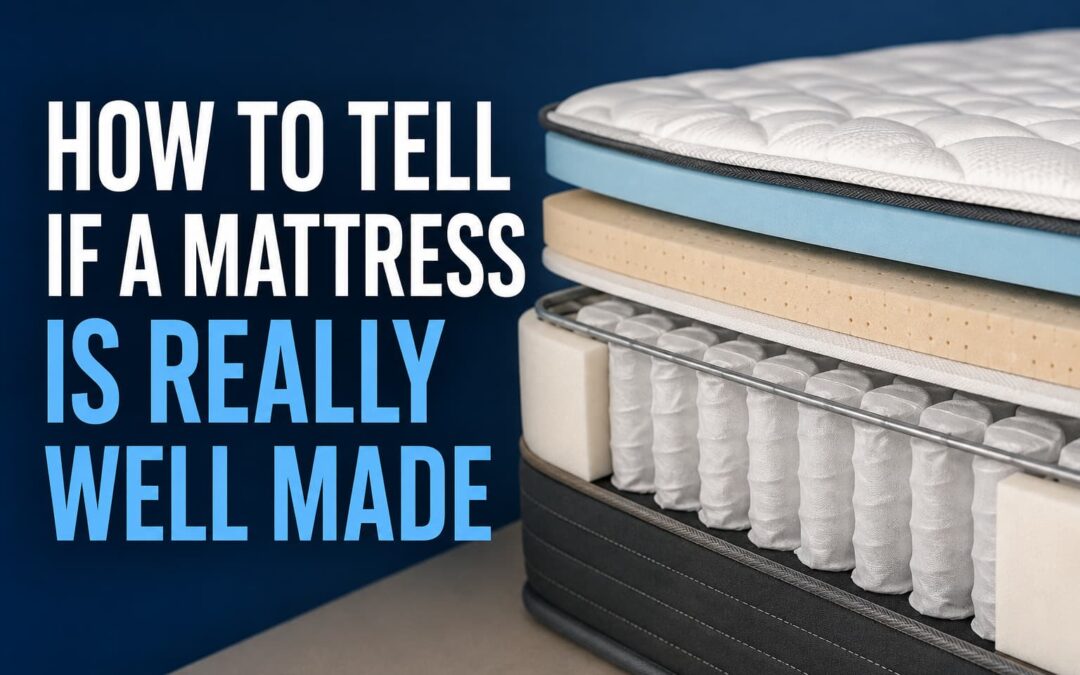
The major components typically include:
- Mattress cover and quilting
- Comfort layers
- Transition layers
- Support core or coil system
- Edge support
- Base materials
The quality and construction of each layer can influence how the mattress feels when new and how well it performs over time.
Look Beyond Mattress Thickness
One common misconception is that a thicker mattress automatically means a better mattress.
A 14-inch mattress isn’t necessarily superior to a 10- or 12-inch mattress simply because it contains more material.
What matters is what those inches are made of.
Manufacturers can create additional height using different combinations of foam, fiber, quilting, transition materials, and support systems. The specifications and purpose of those layers matter more than height alone.
When comparing mattresses, buyers should ask what is actually inside the mattress rather than relying primarily on its overall thickness.
Mattress Construction: What Each Component Does
| Mattress Component | Main Purpose | What to Consider |
|---|---|---|
| Cover & Fabric | Creates the sleeping surface | Construction, feel and durability |
| Quilting | Provides initial cushioning | Material and thickness |
| Comfort Layers | Provides cushioning and pressure relief | Material, density and construction |
| Transition Layer | Connects comfort and support systems | Responsiveness and thickness |
| Coil/Support Core | Provides structural support | Design and overall construction |
| Edge Support | Stabilizes mattress perimeter | Reinforcement method |
| Base Layer | Supports mattress structure | Strength and stability |
The important point is that these components don’t function independently. Mattress performance depends on how effectively they work together.
Does a Higher Coil Count Mean a Better Mattress?
Not necessarily.
Coil count can provide useful information, but it should never be considered by itself.
The design of the coil system, coil gauge, configuration, mattress size, surrounding materials, and overall construction can all influence performance.
For example, a mattress advertised primarily around a large coil-count number isn’t automatically better than a mattress with fewer coils but a well-engineered support system.
Instead of asking only:
“How many coils does this mattress have?”
A better question is:
“How is the entire support system designed?”
This distinction is particularly important when comparing mattresses with dramatically different prices.
Why Foam Quality Matters
Foam isn’t simply foam.
Different foam formulations and specifications can produce dramatically different levels of cushioning, responsiveness, support, and durability.
A mattress can feel extremely comfortable in a showroom because its upper layers are soft and plush. The more important question is whether those materials will maintain their characteristics with regular use.
That’s why consumers shouldn’t judge mattress quality entirely from the first few minutes of lying on it.
A mattress needs to perform night after night, not simply create a good first impression.
What Causes a Mattress to Sag?
Mattress sagging can have several potential causes, including deterioration of comfort materials, weakening of support components, improper foundation support, or normal wear over an extended period.
This is another reason mattress construction matters.
If one layer begins losing its structural characteristics, it can affect how the entire mattress feels.
Consumers sometimes assume that visible sagging automatically means the coil system has failed. However, changes in the comfort layers can also contribute to impressions or changes in the sleeping surface.
Determining what’s happening requires looking at the mattress as a complete construction rather than focusing on one component.
Why Edge Support Matters More Than Many Buyers Realize
Edge support is often overlooked during mattress shopping.
Yet the perimeter of a mattress can influence how stable the bed feels when someone sits or sleeps close to the edge.
Effective edge construction can also help maximize the usable sleeping surface.
This can be particularly important for couples because both sleepers may regularly use areas close to the mattress perimeter.
When evaluating a mattress, don’t test only the center. Sit and lie near different parts of the mattress to understand how consistent its support feels across the sleeping surface.
Firmness and Quality Are Not the Same Thing
A firm mattress isn’t automatically a high-quality mattress, and a soft mattress isn’t necessarily poorly constructed.
Firmness describes feel—not overall manufacturing quality.
A softer mattress can use excellent materials and thoughtful construction, while a very firm mattress can still contain lower-quality components.
The appropriate firmness is influenced by personal preferences, sleeping position, body characteristics, and mattress design.
Consumers should therefore separate two questions:
Does this mattress feel right for me?
and
Is this mattress well constructed?
Both questions matter.
What Should You Look for When Comparing Mattresses?
Before buying a mattress, consider asking:
- What materials are used in the comfort layers?
- What type of support system does the mattress use?
- How is the mattress perimeter reinforced?
- What contributes to the mattress’s overall height?
- How do the different layers work together?
- What warranty comes with the mattress?
- What does the warranty actually cover?
- Who manufactures the mattress?
The last question is particularly valuable.
Knowing who’s behind the product can provide additional context about manufacturing experience, product consistency, customer support, and quality standards.
Why Mattress Manufacturing Quality Matters
Consumers typically see only the finished mattress.
They don’t see the individual materials, assembly process, construction decisions, or quality-control procedures involved in producing it.
That is why manufacturing expertise matters.
Successful mattress construction requires balancing multiple characteristics rather than maximizing a single specification.
A mattress needs the appropriate combination of:
- Comfort
- Support
- Stability
- Durability
- Material performance
- Construction consistency
Changing one component can potentially change how other components perform.
This is what makes mattress manufacturing more complex than simply stacking several layers of material together.
The Best Mattress Isn’t Necessarily the One With the Biggest Numbers
Mattress marketing often emphasizes numbers because they’re easy to compare.
More coils.
More inches.
More layers.
But more isn’t automatically better.
A properly designed mattress should use materials and components that serve a specific purpose within the overall construction.
Consumers can make better decisions by asking why a particular component is being used rather than simply asking how much of it is included.
The United Bedding Approach
At United Bedding, we understand that mattress quality starts with thoughtful construction.
Every component of a mattress contributes to the finished sleep surface, which is why materials, support systems, comfort layers, and overall construction need to work together.
Whether you’re evaluating mattresses for personal use, retail, hospitality, or another application, understanding what’s underneath the fabric can help you make a much more informed decision.
Instead of choosing a mattress based solely on marketing terminology, price, thickness, or a single specification, look at the complete construction of the mattress.
That’s where quality begins.
Contact United Bedding
Interested in learning more about mattress manufacturing or United Bedding products? Contact our team today.
United Bedding
Website: www.unitedbedding.com
Tel: 908-668-0220
Fax: 908-668-4870
Email: unitedbed@gmail.com